


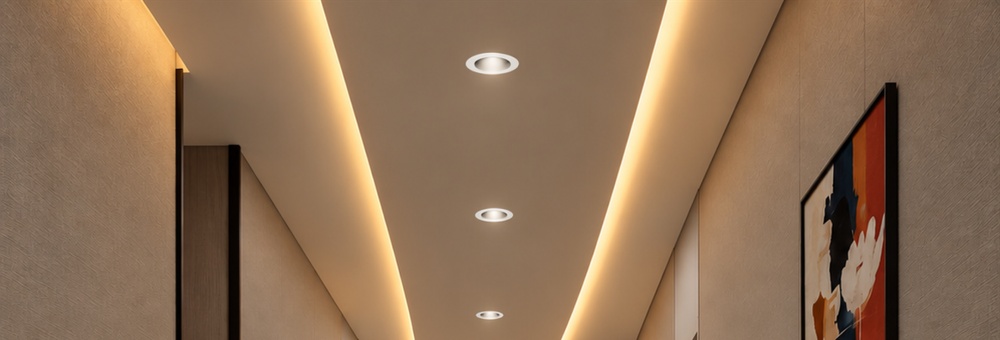
Lighting can change the way a room looks and feels. A room with the right lighting feels comfortable, while poor lighting can make even a beautifully designed space look dull. This is one reason why downlights have become a popular choice in modern homes.
If you are building a new home or planning to update an existing one, you may have come across different types of downlights. Some fit inside the ceiling, while others sit on the surface. You will also find different wattages, sizes and light colours.
But how do you know which one is right for your home?
This guide explains what downlights are, the types available, how much wattage you may need and how far apart they should be installed.
Table of Contents
- What Exactly Are Downlights?
- Different Types of Downlights for Your Home
- How Much Wattage Do You Need for a Room?
- How Far Apart Should Downlights Be Spaced?
- Recessed vs Surface Mounted Downlights: Which Should You Choose?
- Choosing the Right Colour Temperature
- A Few Things to Check Before Buying Downlights
- Conclusion
- Frequently Asked Questions
What Exactly Are Downlights?
A downlight is a light fitting that directs light downwards, usually from the ceiling. It is designed to provide focused or general lighting without taking up much visible space.
Most modern downlights use LED technology. They consume less electricity than traditional incandescent bulbs and generally last longer, making them a practical choice for everyday home lighting.
You can use them as the main source of light in a room or combine them with other fittings such as pendant lights, chandeliers and wall lights.
For example, in a living room, downlights can provide general lighting across the space, while a decorative light above the dining table adds a different look.
They are also useful in kitchens, where good lighting is needed over worktops and preparation areas.
Different Types of Downlights for Your Home
Not every downlight is designed in the same way. The main difference is how the fitting sits in the ceiling and how it directs light.
Before choosing one, it helps to understand the two most common options.
Here are the main differences:
- LED Downlights: A practical choice for energy-efficient everyday lighting.
- Recessed Downlights: Ideal for a neat ceiling with fewer visible fittings.
- Surface Mounted Downlights: Useful when there isn't enough ceiling space for recessed installation.
- Adjustable Downlights: Allow you to direct light towards a particular area or feature.
How Much Wattage Do You Need for a Room?
Choosing the right downlight wattage is important. A light that is too bright can make a room uncomfortable, while one that is too dim may not provide enough visibility. The room itself also matters.
A kitchen usually needs brighter lighting because people prepare food, clean and work on countertops. A bedroom may need softer lighting, especially if you prefer a relaxed atmosphere in the evening.
As a general starting point:
- Bedrooms: Around 5–7 watts per downlight may suit smaller spaces, depending on brightness.
- Living Rooms: Around 7–10 watts can work for general lighting.
- Kitchens: Around 8–12 watts may be useful where brighter lighting is needed.
- Bathrooms: Around 6–10 watts can be suitable, depending on the room size and layout.
These are only starting points. Always check the lumen output and total light needed for the room before deciding how many fittings to install.
How Far Apart Should Downlights Be Spaced?
Buying good-quality downlights is only half the job. Their position also matters.
If all the lights are placed too close together, some areas may become unnecessarily bright. If they are too far apart, you may end up with dark patches between them.
In a kitchen, placing downlights near worktops can help reduce shadows while preparing food. In a living room, an even arrangement can provide comfortable general lighting.
A few things to remember:
- Keep the spacing even for balanced lighting.
- Consider the ceiling height before deciding the distance.
- Place lights where people actually need them.
- Avoid positioning downlights where furniture or ceiling features will block the light.
It is always better to plan the layout before the ceiling work begins rather than deciding where to place the fittings at the last minute.
Recessed vs Surface Mounted Downlights: Which Should You Choose?
Both options can work well, but the right choice depends on your ceiling and the look you want.
Recessed downlights are often preferred in modern interiors because they sit inside the ceiling. They create a simple appearance and do not take up much visual space.
Surface-mounted downlights are more suitable when the ceiling cannot accommodate recessed fittings. This can happen in homes with concrete ceilings or limited space above the ceiling.
Installation is another point to consider. Recessed fittings need suitable ceiling space and openings, while surface-mounted models are attached directly to the ceiling.
Before choosing, consider:
- The type and construction of your ceiling.
- The available space above the ceiling.
- The appearance you want for the room.
- The installation requirements of the fitting.
If you are unsure, speak to an electrician before purchasing the lights.
Choosing the Right Colour Temperature
Have you ever noticed that some lights look yellow while others appear bright white? This is because of colour temperature, which is measured in Kelvin (K).
Warm white light, usually around 2700K–3000K, creates a softer and more relaxed feeling. It works well in bedrooms and living rooms.
Neutral white, around 3500K–4000K, gives a more balanced appearance and can suit kitchens and other everyday spaces.
Cool white, around 5000K–6500K, produces a brighter, cooler appearance. It may be useful in certain work areas, although it can feel too harsh for some living spaces.
For most homes, warm or neutral white is a comfortable choice.
A Few Things to Check Before Buying Downlights
Before ordering your lights, check more than just their appearance and price.
Make sure the fittings are suitable for the room where you plan to install them. This is particularly important in bathrooms, where electrical fittings need the correct protection rating for their location.
You should also check whether the lights are dimmable and whether they need a compatible dimmer switch.
Keep these points in mind:
- Check the brightness in lumens as well as wattage.
- Choose the correct protection rating for bathroom areas.
- Check whether the fittings are compatible with your dimmer.
- Use a qualified electrician for safe installation.
Conclusion
Downlights are a practical way to light different areas of your home without making the ceiling look crowded. Whether you choose recessed or surface-mounted designs, the important things to consider are brightness, wattage, spacing and colour temperature. A little planning before installation can help you avoid dark corners, excessive brightness and unnecessary changes later.
For homeowners looking at lighting options, Jaquar Lights offers a range of lighting solutions designed for different spaces and interior styles. Choosing the right downlights can help make your home feel brighter, more comfortable and better suited to everyday life.
Frequently Asked Questions
1. What is a downlight?
A downlight is a ceiling light that directs light downwards and is commonly used in living rooms, bedrooms, kitchens and bathrooms.
2. What wattage downlight do I need for a room?
The wattage depends on the room size and brightness required, but LED downlights between 5 and 12 watts are common for residential spaces.
3. How far apart should downlights be spaced?
Downlights are often spaced around 1.2–1.8 metres apart, but the correct distance depends on ceiling height, beam angle and light output.
4. What is the difference between recessed and surface-mounted downlights?
Recessed downlights sit inside the ceiling, while surface-mounted downlights are attached directly to its surface.
5. Which colour temperature is best for downlights at home?
Warm white (2700K–3000K) is suitable for relaxed spaces such as bedrooms and living rooms, while neutral white (3500K–4000K) works well in kitchens and work areas.