


A wash basin has a fairly simple job, but choosing one for your bathroom is not always as straightforward.
There is the size to consider, the available space, the way it will be installed and, of course, how you want the bathroom to look. A countertop basin can create a very different feel from a wall-hung or pedestal basin, even when all three serve the same purpose.
The right choice usually starts with the bathroom itself.
Before looking at colours and finishes, take a look at the available space, the type of installation you need and how you expect to use the basin every day.
Start With the Space You Have
The amount of space around the basin should be one of the first things you consider.
A large basin may look impressive in a spacious bathroom, but it can make a smaller bathroom feel crowded. On the other hand, choosing a basin that is too small for a large bathroom can leave the space feeling unbalanced.
Measure the area where the basin will go, including the available width and depth. Also consider what will sit around it, such as a countertop, mirror, storage or bathroom fittings.
This gives you a much better starting point than choosing a basin simply because you like its shape.
Countertop Basin: A Basin That Becomes Part of the Design
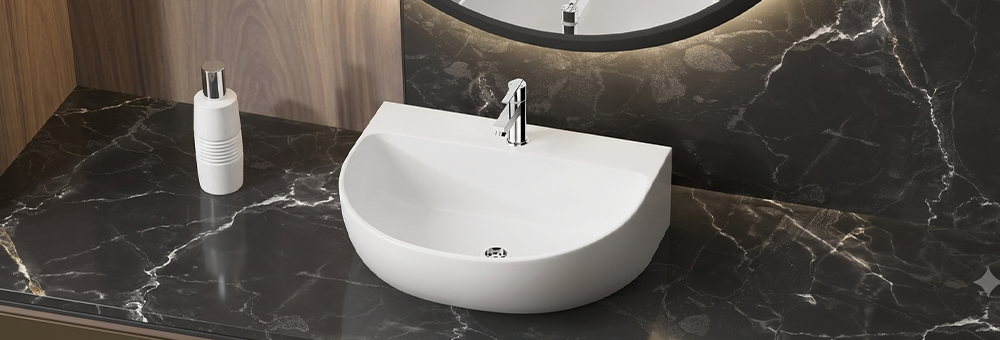
A countertop basin sits on top of a counter or vanity, making the basin itself a visible part of the bathroom design.
This type of installation gives you plenty of scope to play with the relationship between the basin, countertop and tap. The height of the completed setup is important, though. Once the basin and counter are combined, they should sit at a comfortable height for everyday use.
Jaquar offers countertop wash basins in different shapes and designs, including round, oval and rectangular forms.
If you are choosing a countertop basin, it helps to decide on the basin and counter together rather than treating them as separate pieces.
Wall-Hung Basin: Keep the Floor Clear
A wall-hung basin is fixed directly to the wall rather than sitting on a pedestal or full vanity unit.
Because there is no pedestal underneath, the floor remains visible. This can help create a more open appearance, particularly in smaller bathrooms.
Wall-hung basins can also give you more flexibility around the area underneath the basin. The exact installation, however, depends on the wall and plumbing arrangement, so it is important to check the installation requirements before making the choice.
Jaquar's basin range includes wall-hung and wall-mounted options in different designs.
Pedestal Basin: A Familiar, Standalone Option
A pedestal basin has a basin mounted over a pedestal that supports it from below.
It gives the bathroom a complete, standalone basin arrangement without requiring a full countertop or vanity.
Pedestal basins can be useful where you want a straightforward installation and do not need storage directly beneath the basin. They also work well when the basin itself is intended to remain the main visual element of the space.
Jaquar offers pedestal basin designs as part of its wash basin range.
Choosing the Right Basin Size
There is no single basin size that works for every bathroom.
The right basin size depends on the room, the available wall or counter space and how much washing area you actually need.
For a smaller bathroom or powder room, a compact basin can help preserve movement around the space. In a larger bathroom, you may have more freedom to choose a wider or deeper design.
Do not measure only the basin itself. Think about the complete installation. A countertop basin, for example, will also need enough counter space around it. A wall-hung basin needs sufficient wall space and the correct fixing arrangement.
The tap also needs to be considered. Its height and reach should work with the basin so that water falls comfortably into it.
Basin Material: What Should You Look For?
The basin material affects its appearance, feel and care requirements.
Ceramic is a familiar choice for bathroom basins, and Jaquar offers ceramic wash basins across different styles and installation types. The brand also offers products using materials such as glass and other specialised finishes in selected collections.
Rather than choosing a material based only on appearance, look at the product information for the specific basin. The finish, shape and cleaning requirements can vary from one product to another.
The material should also work with the overall bathroom. A clean white basin may blend easily into a range of interiors, while a more distinctive finish can become a stronger design element.
Think About the Basin and Tap Together
A basin does not work on its own.
The tap needs to be compatible with the basin and positioned so that the water flows into it correctly. This becomes particularly important with countertop basins, where the tap may be mounted on the counter or wall depending on the design.
The height, reach and position of the tap should all be considered before installation.
This is also where the overall look comes together. A sculptural countertop basin may call for a different tap arrangement from a compact wall-hung basin.
What About Small Bathrooms?
If space is limited, start by looking at the footprint rather than trying to fit the largest basin possible.
A wall-hung basin can keep the floor area visually open. A compact basin can leave more room around the toilet, shower or bathroom entrance.
You should also think about the door swing and movement around the basin. A basin that technically fits into the room may still make the space uncomfortable if there is not enough room to move around it.
For a small bathroom, proportions matter more than size alone.
How to Choose a Basin for a Larger Bathroom
Larger bathrooms give you more freedom, but they still need some planning.
A wider countertop basin can become a focal point when paired with a suitable vanity or counter. A pedestal basin can keep the installation visually lighter if you do not need storage underneath.
If two people regularly use the bathroom, you may also want to consider whether a wider basin arrangement or twin-basin setup makes more sense for the space.
The important thing is to make the basin work with the scale of the room rather than filling the available space simply because you can.
A Few Things to Check Before Buying
Before settling on a wash basin, check these details:
Measure the available space.
Look at the width, depth and height available for the complete installation.
Check the installation type.
Make sure the basin is suitable for the wall, countertop, vanity or pedestal arrangement you have planned.
Look at the tap position.
The basin and tap should work together, both practically and visually.
Consider the material and finish.
Think about the overall bathroom design as well as everyday cleaning.
Check the product dimensions.
Do not rely on photographs. Always compare the actual product dimensions with the available space.
Maintaining Your Wash Basin
Regular cleaning is usually all that is needed to keep a basin looking good.
Use a suitable bathroom cleaner and a soft cloth or sponge, following the care instructions provided for the particular basin. Avoid abrasive materials or cleaning methods that could damage the surface.
It is also a good idea not to leave standing water, soap residue or other deposits on the surface for long periods. A quick wipe after cleaning can help keep the basin looking fresh.
For specific materials or finishes, always follow the manufacturer's maintenance instructions.
The Right Basin Is About More Than Looks
There is no single best basin for every bathroom.
A countertop basin can become a strong design feature. A wall-hung basin can help keep a compact bathroom feeling open. A pedestal basin offers a straightforward standalone arrangement.
What matters is how the basin fits into the room.
Start with the available space. Then consider the installation, basin size, material, tap arrangement and the way you use the bathroom. Once those things are clear, choosing the right wash basin becomes much easier.
FAQs
What are the different types of wash basins?
Wash basins are available in several installation styles, including countertop, wall-hung, pedestal and other wall-mounted configurations. The right type depends on the available space, bathroom layout and installation requirements.
How do I choose the right basin size for my bathroom?
Measure the available width and depth first, then consider the complete installation, including the counter, vanity and tap. Make sure there is enough space around the basin for comfortable movement.
Which material is best for a wash basin?
There is no single material that is best for every bathroom. Ceramic is widely used for wash basins, while other materials are also available in selected designs. Consider the basin's appearance, installation and care requirements before choosing.
What is the difference between pedestal and countertop basins?
A pedestal basin is supported by a pedestal underneath, while a countertop basin sits on top of a counter or vanity. The two create different looks and require different installation arrangements.
How do I maintain and clean a wash basin?
Clean the basin regularly using a suitable cleaner and a soft cloth or sponge. Avoid abrasive cleaning materials and follow the manufacturer's care instructions for the specific basin and finish.