


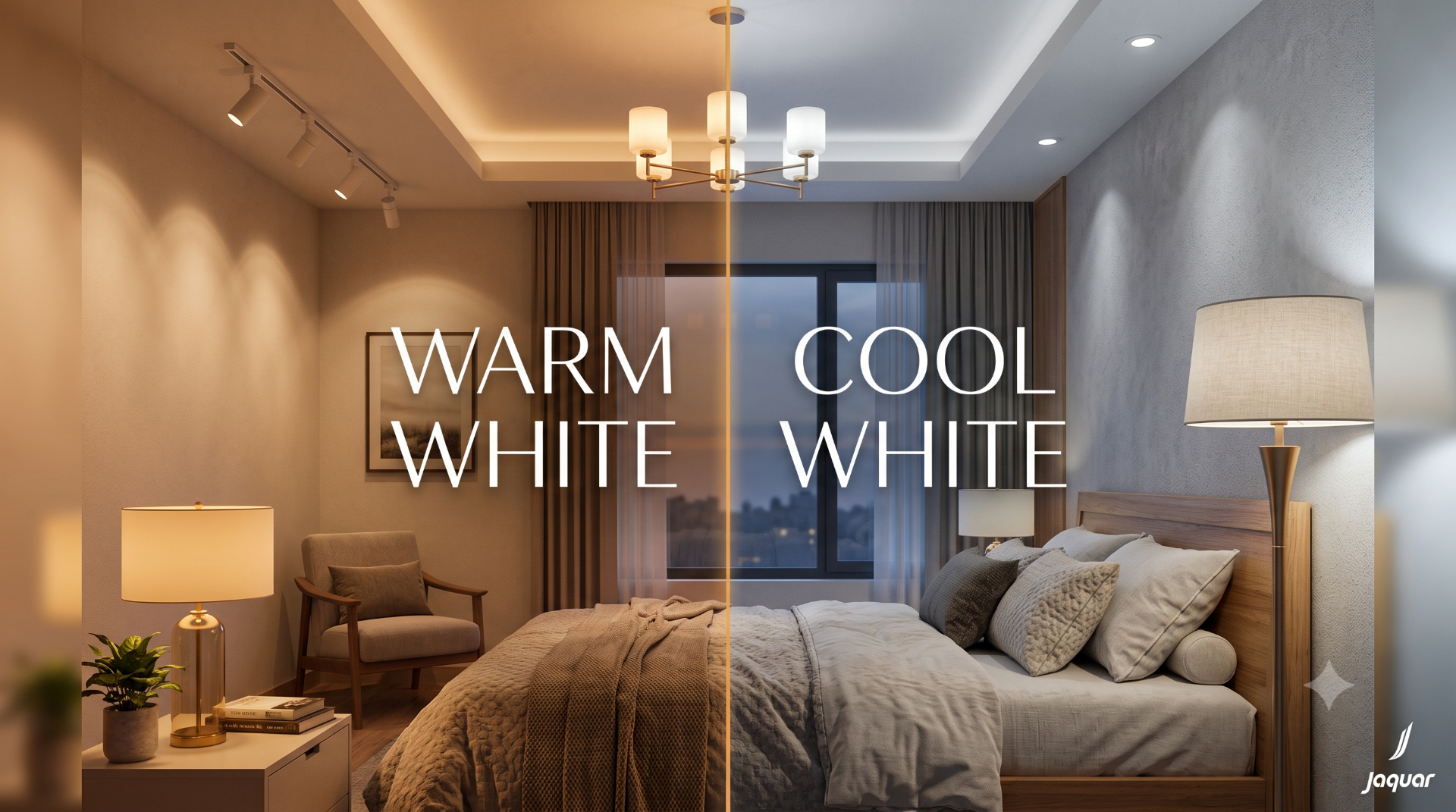
Choosing a light is often treated as a question of brightness. Yet two lights with similar brightness can make the same room feel completely different.
One may give the space a soft, inviting character, while another makes the same walls, furniture and finishes appear cleaner and more energetic. The difference is largely influenced by colour temperature—the visual warmth or coolness of the light.
Warm white tends towards a softer yellow-white appearance, while cool white has a cleaner, more bluish-white character. Between them sits neutral white, which offers a more balanced appearance.
For homes in Sri Lanka, understanding this distinction can be particularly useful. Bedrooms, living rooms, dining areas, studies and multifunctional spaces all have different lighting requirements. Natural daylight also changes how a room looks throughout the day, meaning the artificial lighting chosen for evening use should complement the home's existing character.
The right colour temperature is therefore not simply a technical specification. It is a design decision that affects comfort, functionality and the way interior materials are perceived.
Understanding Colour Temperature
Colour temperature is measured in Kelvin (K).
As a general guide:
- Warm white: around 2700K–3000K
- Neutral white: around 3500K–4000K
- Cool white: around 5000K–6500K
Warm white appears softer and warmer. Cool white appears brighter and crisper. Neutral white occupies the middle ground.
These ranges should be treated as broad reference points. The actual visual experience depends on the fixture, room surfaces, surrounding light and the amount of daylight entering the space.
The important question is therefore not "Which colour temperature is best?" but "Which colour temperature suits this room and how it is used?"
Warm White vs Cool White: The Core Difference
Warm white generally creates a more relaxed visual environment.
It can complement timber, warm neutrals, textured fabrics and earthy finishes, making it particularly useful in residential spaces designed around comfort.
Cool white has a cleaner and more energetic appearance. It can be useful in areas where visual clarity matters and where the room needs to feel more functional.
Neutral white can provide a middle ground when the space serves multiple purposes.
The distinction becomes particularly important in homes where several rooms connect visually. A living room, dining area and kitchen may share an open layout, while bedrooms and studies have more distinct functions.
Warm White Lighting for Bedrooms
The bedroom is usually associated with rest, making warmer light a natural consideration.
Warm white can create a softer evening atmosphere and complement common bedroom materials such as wood, fabric, neutral walls and upholstered furniture.
Instead of using one bright ceiling fixture, consider layering the lighting.
A recessed or ceiling fixture can provide general illumination, while a wall lamp or table lamp beside the bed provides a lower layer for reading or winding down.
Jaquar Sri Lanka's lighting portfolio includes indoor and decorative lighting categories that can be used to create these different layers.
Warm White Lighting for Living Rooms
The living room is often used for several activities: entertaining guests, relaxing, watching television, reading and spending time with family.
Warmer light can work well when the primary objective is to create a comfortable residential atmosphere.
A decorative pendant or chandelier can provide a focal point, while wall lamps, floor lamps or table lamps introduce lower levels of illumination.
The result is more flexible than relying on one central ceiling fixture.
Warm White Lighting for Dining Areas
Dining spaces benefit from lighting that feels comfortable rather than excessively clinical.
A warmer light can complement dining furniture, table settings and surrounding finishes.
A pendant positioned above the dining table can establish a defined zone within an open-plan interior. In a larger dining area, a chandelier can provide a stronger decorative focal point.
The surrounding ambient lighting can remain relatively understated so that the dining area retains its visual focus.
Cool White Lighting for Work and Study Areas
Cooler light can be useful where visual clarity and concentration are important.
A home study, workspace or reading area may benefit from a cleaner white appearance, particularly when the room is used for detailed tasks.
However, cooler colour temperature should not be confused with excessive brightness.
The goal is to create comfortable visibility without unnecessary glare or visual fatigue.
A well-positioned indoor light can provide focused illumination over a desk or work surface while the rest of the room remains more softly lit.
Cool White Lighting for Dressing Areas
A dressing area has a different requirement from a bedroom's relaxation zone.
The priority is often to see clothing, colours and personal items clearly.
A neutral or cooler light can therefore be useful around a dressing table or wardrobe area.
This does not mean the entire bedroom needs to use cool white. Creating a separate functional lighting zone allows the main bedroom to retain a warmer atmosphere while the dressing area remains practical.
What Is Neutral White Lighting?
Neutral white sits between warm and cool white.
It offers a balanced appearance that can work well in spaces where the lighting needs to support several activities without creating a strongly warm or cool atmosphere.
It can be considered for studies, corridors, multipurpose rooms and other areas where a middle-ground appearance is desirable.
Neutral lighting can also help connect rooms that use different colour temperatures.
How Natural Daylight Changes the Picture
Natural daylight is one of the most important factors in evaluating artificial lighting.
The amount and quality of daylight entering a room can change significantly depending on windows, orientation, surrounding buildings, curtains and time of day.
A room may feel bright and relatively cool during the day but become considerably warmer in appearance after sunset when artificial lights are switched on.
This is why colour temperature should be evaluated at the time when the room is most frequently used.
If the living room is primarily used in the evening, assess the lighting after sunset rather than relying entirely on its daytime appearance.
Warm White vs Cool White for Kitchens
Kitchens are activity-driven spaces.
Food preparation, cleaning, organising and other detailed tasks generally benefit from clear illumination.
A neutral or cooler appearance may therefore be appropriate for functional kitchen lighting.
However, many modern homes connect the kitchen directly with dining and living areas. In these cases, the lighting should still feel visually coordinated.
One solution is to keep the functional kitchen lighting clearer while using warmer decorative or adjacent lighting in the dining and living zones.
Warm White vs Cool White for Bathrooms
Bathrooms generally benefit from good visibility, particularly around functional areas.
The choice between warm, neutral and cool light should consider the bathroom's overall design, finishes and the tasks being performed.
If the bathroom connects directly to a bedroom, maintaining some visual relationship between the two spaces can also create a smoother transition.
The goal is not simply maximum brightness. Good bathroom lighting should provide useful visibility without unnecessary glare.
Warm White vs Cool White for Corridors
Corridors do not usually require the same level of task lighting as kitchens or workspaces.
A warmer or neutral appearance can help create a comfortable transition between rooms.
This is particularly useful when a corridor connects warmer living spaces with bedrooms.
Lighting should remain consistent enough to prevent abrupt changes in visual atmosphere.
How Light Changes the Appearance of Interior Materials
Colour temperature can influence how materials are perceived.
Warm light tends to emphasise warm colours and can make timber and earthy finishes feel richer.
Cooler light can make white and cool-toned surfaces appear cleaner.
This matters when selecting lighting for interiors with carefully coordinated finishes.
Before committing to a particular colour temperature, consider how it interacts with:
- Wall colours
- Flooring
- Timber
- Upholstery
- Curtains
- Decorative finishes
- Metallic surfaces
A lighting choice that works well in one room may produce a different result in another because the surrounding materials are different.
Can Warm and Cool White Be Used Together?
Yes, but the combination should be intentional.
Using different colour temperatures can help define functional zones.
For example, a bedroom can use warm lighting for general evening ambience and a more neutral source near the dressing area.
A living room can have warm decorative lighting while a dedicated reading area has a different light source.
The important principle is visual hierarchy. If two contrasting colour temperatures are placed next to each other without a functional reason, the difference can appear distracting.
Should Every Room Have the Same Colour Temperature?
No.
A home is made up of spaces with different purposes, and each space can have its own lighting character.
Bedrooms and living areas may favour warmer illumination, while workspaces and dressing areas may benefit from a more neutral or cooler appearance.
However, connected spaces should maintain enough consistency to feel like part of the same home.
This is particularly important in open-plan interiors.
Warm White vs Cool White in Open-Plan Homes
Open-plan homes require additional planning because multiple functions occupy the same visual field.
A living area, dining table and kitchen may all be visible at once.
Rather than selecting one colour temperature for the entire space, think about the lighting zones.
The kitchen may use a more functional lighting approach. The dining area can have warmer decorative lighting. The living area can use warm ambient and accent lighting.
The individual zones remain distinct while the overall space still feels coordinated.
Choosing Lighting for Smaller Homes
In a compact home, lighting can influence the perceived openness of the room.
Recessed lighting can reduce visual clutter, while wall lamps can provide illumination without taking up furniture space.
A pendant or compact decorative fixture can introduce character without overwhelming the room.
The colour temperature should also support the size and purpose of the space. A softer light can create a comfortable atmosphere, while functional areas may benefit from a cleaner appearance.
Choosing Lighting for Larger Homes
Larger homes provide more room for multiple lighting layers.
A master bedroom could combine recessed lighting, bedside wall lamps and a decorative pendant.
A large living room could use indoor ceiling lighting with floor lamps, table lamps and decorative wall lighting.
The key is coordination. Multiple fixtures should contribute to one lighting plan rather than becoming separate visual elements.
Jaquar Sri Lanka offers both indoor and decorative lighting categories that can support this layered approach.
How to Select the Right Colour Temperature
Start with the function
Ask what people actually do in the room.
Relaxation generally calls for a different atmosphere from detailed work.
Look at natural daylight
Assess how the room appears during the day and after sunset.
Consider the materials
Warm and cool surfaces respond differently to light.
Think about adjacent rooms
Connected spaces should not feel visually disconnected.
Consider the fixture
A decorative wall lamp, recessed fixture and pendant may distribute light differently even when their colour temperature is similar.
Think about personal preference
Lighting is experienced every day. The final decision should also reflect how comfortable the occupants find the light.
Common Mistakes to Avoid
Choosing light purely by Kelvin value
The number tells you about the colour appearance but not the complete lighting experience.
Using cool light throughout the home
Cool lighting may be useful in functional spaces but can create a more active atmosphere than desired in bedrooms and living areas.
Using warm light in every situation
Warm light is not automatically appropriate for detailed tasks.
Mixing colour temperatures randomly
Different temperatures can work together, but they should define purposeful zones.
Ignoring daylight
A lighting scheme can look very different during the day and at night.
Forgetting the surrounding finishes
Wall colours, floors and furniture all influence the final appearance.
A Practical Room-by-Room Starting Point
Room | Typical starting point | Main consideration |
Bedroom | Warm white | Relaxation and evening comfort |
Living room | Warm to neutral | Relaxation and social activity |
Dining room | Warm white | Comfortable ambience |
Study | Neutral to cool | Visual clarity |
Dressing area | Neutral to cool | Seeing colours and details |
Kitchen | Neutral to cool | Functional tasks |
Reading corner | Warm to neutral | Focused comfort |
Corridor | Warm to neutral | Smooth transition |
These are starting points rather than strict rules. The best choice depends on the room's materials, natural light, fixture position and how the occupants use the space.
Building a Complete Lighting Scheme With Jaquar
Colour temperature works best when considered alongside the complete lighting plan.
Jaquar Sri Lanka's lighting portfolio includes indoor and decorative lighting categories, allowing different fixture types to be considered according to the room and its function.
For example, general indoor lighting can establish the room's baseline illumination, while decorative fixtures such as pendants, wall lamps, table lamps and floor lamps can introduce additional layers where appropriate.
This approach makes colour temperature part of the overall design rather than an isolated technical decision.
Frequently Asked Questions
1. Which is better, warm white or cool white?
Neither is universally better. Warm white is generally suited to relaxed residential spaces, while cooler lighting can be useful where visual clarity and focused activity are important.
2. Is warm white good for bedrooms?
Yes. Warm white can create a softer evening atmosphere and work well with common bedroom finishes such as timber, fabric and neutral colours.
3. Should a study use cool white light?
A neutral or cooler light can be useful in a study because it provides a cleaner visual appearance for reading and detailed work. The fixture should still be positioned to avoid glare.
4. Can warm and cool lights be used in the same home?
Yes. Different rooms can use different colour temperatures according to their function. Connected spaces should still maintain a degree of visual consistency.
5. How do I choose between warm, neutral and cool white?
Start with the room's purpose, then consider natural daylight, interior finishes, adjacent spaces, fixture type and personal preference. These factors together provide a better basis for selection than colour temperature alone.
Conclusion
Choosing between warm white and cool white is ultimately a decision about how a space should function and feel.
Warm white can bring softness to bedrooms, living rooms and dining areas, while neutral and cooler lighting can support spaces where visibility and detailed activity are more important.
The most successful lighting schemes rarely use one colour temperature indiscriminately throughout the home. Instead, they create layers and zones that respond to different activities while maintaining a coherent visual relationship between rooms.
Jaquar Sri Lanka's lighting portfolio provides indoor and decorative lighting options that can be incorporated into these layered schemes.
When fixture type, placement and colour temperature are considered together, lighting becomes much more than a source of illumination. It becomes part of how the home feels throughout the day.