


The lighting in a home is often noticed only when it feels wrong. A bedroom may seem too bright at night, a kitchen counter may be difficult to work at, or a decorative pendant may lose its appeal because the bulb does not suit the fitting. In many cases, the issue is not the fixture itself. It is the bulb inside it.
Choosing a bulb involves a few simple decisions: what the light is for, how bright it needs to be, what colour it should appear and whether it is compatible with the fitting. These details influence comfort, functionality and the way finishes and furnishings look.
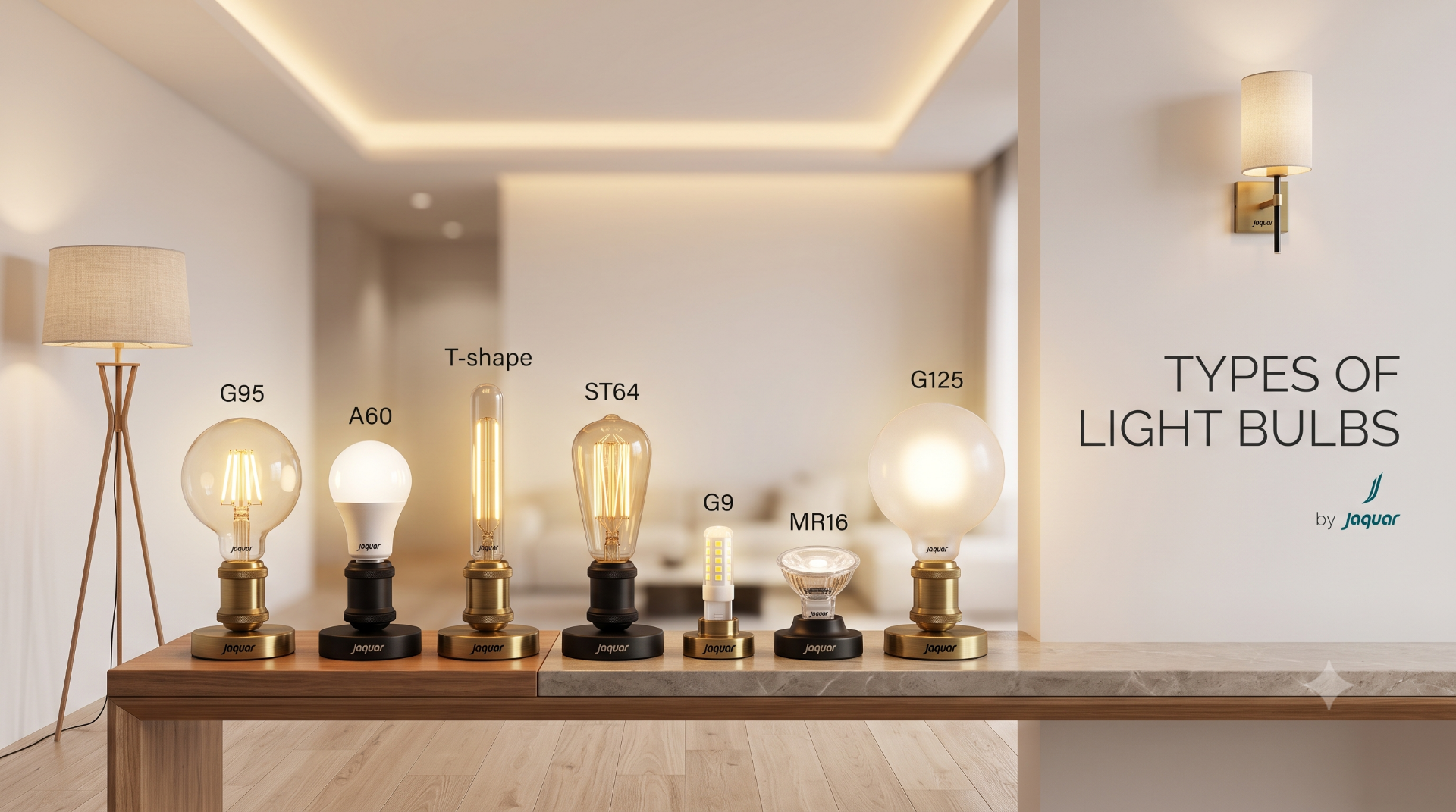
Understanding the main types of light bulbs helps make the selection process more straightforward. This guide covers LED bulbs, filament-style LED bulbs and emergency bulbs, with practical advice for choosing and using them in different spaces.
The Main Types of Light Bulbs
For everyday residential lighting, three useful categories to understand are:
- LED bulbs: General-purpose lighting options for many rooms and fixtures.
- Filament-style LED bulbs: Decorative bulbs designed to make the light source part of the fixture's appearance.
- Emergency bulbs: Products intended to provide illumination during a power interruption, according to their operating instructions.
Each has a different role. The right choice depends on the space, the fitting and the kind of illumination you need.
Jaquar Sri Lanka's lighting portfolio includes LED lighting, decorative lighting and lamp-related products. Product availability and specifications can vary, so check the Sri Lanka website before selecting a particular bulb.
1. LED Bulbs for Everyday Lighting
LED bulbs are a practical option for many homes because they provide illumination with relatively low electricity consumption. They are available in different brightness levels, shapes and colour temperatures, allowing them to suit a variety of fixtures.
Their efficiency and lifespan depend on the specific product and how it is installed and used. A bulb installed in an unsuitable enclosed fitting, for example, may not perform as intended.
Where can LED bulbs be used?
Living rooms: Use bulbs that provide comfortable general illumination. Where the room serves several purposes, combine the main fixture with lamps or other lighting layers.
Bedrooms: Warm white light is often preferred for a relaxed atmosphere. Bedside lamps can provide a more focused pool of light for reading.
Kitchens: Choose lighting that supports food preparation, cleaning and other daily tasks. Consider the work surfaces, not just the centre of the room.
Study areas: A suitable desk lamp can make reading and focused work more comfortable. Position it to minimise shadows and reflections.
Corridors: Consistent illumination can make transitions between rooms feel more natural.
How to choose an LED bulb
Start with the fitting. Check the socket type, bulb dimensions and fixture rating.
Then consider the required brightness. Lumens measure light output, while watts measure power consumption. Comparing lumen output is a more reliable way to judge how much light a bulb produces.
Finally, select a colour temperature that suits the room. Warm, neutral and cool white light create different visual effects, even when their brightness is similar.
Jaquar's wider lighting portfolio includes LED bulb options such as Prima HD and Illuminator models. Confirm the current Sri Lanka listing for the exact product details and availability.
2. Filament-Style LED Bulbs for Decorative Fixtures
Some fixtures are designed around the appearance of the bulb. In an open pendant or decorative lamp, the bulb may be visible from across the room.
Filament-style LED bulbs recreate the familiar look of traditional filament lighting while using LED technology. They can complement interiors that combine modern forms with classic decorative details.
They are worth considering for:
- Open pendant fixtures
- Decorative wall lights
- Table lamps with visible bulbs
- Dining areas
- Feature lighting in living spaces
How do they differ from standard LED bulbs?
The principal difference is visual. A standard LED bulb may use an opaque or diffused cover, while a filament-style bulb is designed to make its internal light-emitting elements part of the appearance.
That does not automatically make it brighter or more suitable for every room. Output, colour temperature, dimensions and fixture compatibility still matter.
If the bulb is visible, also consider its appearance when switched off. The shape and finish should complement the fixture rather than compete with it.
When should you choose one?
Choose a filament-style bulb when the fitting is intended to show the bulb and the product's light output suits the room. If the fixture is concealed behind a shade, the decorative appearance may make little difference.
3. Emergency Bulbs for Unexpected Power Cuts
An interruption to the power supply can make familiar rooms and circulation areas difficult to navigate. Emergency bulbs are designed to provide light in these situations, depending on their construction and operating requirements.
They can be useful in selected locations such as:
- Corridors
- Entrance areas
- Staircase approaches
- Rooms used regularly at night
- Areas where sudden darkness would be inconvenient
Jaquar's lighting range includes Kriza Emergency Bulb products. Check the specific product instructions to understand how the bulb charges, when emergency operation begins, how long it operates and which fittings are compatible.
What should you consider?
An emergency bulb should be selected for its intended function, not simply because it looks like a standard bulb.
Check whether the bulb needs to remain connected to the power supply to charge. Confirm how it behaves when the switch is off or when the supply is interrupted. Follow the manufacturer's instructions rather than assuming all emergency bulbs work in the same way.
For essential emergency lighting or situations governed by building-safety requirements, use the appropriate dedicated system. A household emergency bulb is not a substitute for a compliant emergency-lighting installation.
Comparing the Three Bulb Categories
Bulb type | Main benefit | Typical use |
LED bulb | Efficient everyday illumination | General room lighting and compatible fixtures |
Filament-style LED bulb | Decorative appearance | Exposed-bulb fixtures and decorative lamps |
Emergency bulb | Backup illumination during a power interruption | Selected rooms and circulation areas |
These categories can overlap in technology. A filament-style bulb may be an LED, and an emergency bulb may also use LED technology. The useful distinction is the role the bulb is designed to perform.
4. Brightness: Why Lumens Matter
A common mistake is choosing a bulb by wattage alone.
Watts indicate how much electrical power a bulb consumes. Lumens indicate the amount of visible light it produces. When comparing the brightness of two bulbs, lumens are therefore the more useful starting point.
However, the brightness you experience also depends on the fixture.
A bulb inside a deep shade may direct less light into the room than one in an open fitting. A ceiling fixture distributes light differently from a table lamp. Wall colour and room layout also affect how bright the space appears.
When replacing an existing bulb, use its current light output as a reference if it is known. If the room has always felt too dim, consider whether the problem is the bulb, the fixture or the placement of the light.
5. Colour Temperature and the Feel of a Room
Colour temperature is measured in kelvin (K) and describes the appearance of the light.
Warm white
Warm white creates a softer, more relaxed atmosphere. It is often suitable for bedrooms, living rooms and dining areas, particularly where warm materials and comfortable surroundings are central to the design.
Neutral white
Neutral white offers a balanced appearance. It can work well in kitchens, study areas and other spaces where a natural-looking light is preferred.
Cool white
Cool white produces a crisper visual effect. It can be useful in functional areas, depending on the room's design and the user's preference.
The right colour temperature is not determined by room type alone. Consider the finishes, daylight, existing fixtures and how the space is used.
For rooms that connect directly, consistency is helpful. A noticeably warm hallway leading into a strongly cool-lit living room can create an abrupt transition unless that contrast is intentional.
6. Choose the Right Bulb for Each Room
Living room
A living room needs to accommodate conversation, entertainment and relaxation. General lighting can be supported by decorative or task lighting, allowing the room to adapt to different activities.
If a pendant or wall fixture exposes the bulb, consider the bulb's appearance as well as its output.
Bedroom
Comfort is usually the priority. Warm white lighting can create a softer atmosphere, while bedside lamps allow reading without illuminating the entire room.
If you want adjustable brightness, confirm that the bulb and dimmer are compatible.
Kitchen
The kitchen requires functional illumination, particularly over work surfaces. Consider whether the fixture distributes light effectively across the areas where food is prepared and handled.
A bright bulb in the centre of the ceiling may not eliminate shadows beneath cabinets or shelving.
Bathroom
Bathroom lighting should support grooming and daily routines. The bulb and fixture must be suitable for their exact installation location and the electrical requirements of the space.
Do not assume that a bulb intended for a dry indoor room is suitable for every bathroom fitting.
Study room
A desk lamp can provide focused light for reading and other close-up activities. Place it so that your hand, furniture or computer screen does not create distracting shadows or reflections.
Entrance and corridor
These spaces benefit from consistent lighting that connects them visually with adjoining rooms. An emergency bulb may be useful in a selected location if its operating requirements suit the intended use.
7. Bulb Shape, Size and Socket Compatibility
The appearance of a bulb is only one part of the selection process. It must also fit the fixture correctly.
Before buying, check the following:
Socket or cap: The base must match the fitting.
Dimensions: Make sure the bulb fits within the shade or enclosure.
Wattage rating: Stay within the fixture's permitted limit.
Electrical supply: Confirm that the bulb is designed for the installation.
Dimming: Check compatibility if adjustable brightness is required.
Environment: Make sure the bulb and fixture are suitable for the location, including any damp or exposed conditions.
If you are unsure about the fitting or electrical installation, ask a qualified electrician. Never force a bulb into a socket or alter the fixture to make it fit.
8. The Fixture Changes the Result
The same bulb can produce different results in different fixtures.
A ceiling light may distribute illumination across a room, while a pendant can concentrate light over a table. A table lamp may create a focused reading area, and a decorative wall light may soften the appearance of a corridor.
This is why the bulb and fixture should be selected together.
Jaquar Sri Lanka offers a wider lighting portfolio that includes decorative, indoor and lamp-related categories. Choosing a bulb with the fixture's intended use in mind helps maintain both functional performance and a coherent appearance.
9. Common Mistakes to Avoid
Using wattage as a brightness measurement: Compare lumens when assessing light output.
Choosing a colour temperature without considering the room: The tone of the light affects the overall atmosphere.
Ignoring the socket type: A bulb that does not fit the base is not a suitable replacement.
Assuming every LED bulb is dimmable: Verify compatibility before installation.
Using a decorative bulb for detailed tasks: A visible filament appearance does not guarantee adequate task lighting.
Overlooking emergency-bulb instructions: Charging and activation requirements are product-specific.
Ignoring the fixture's environment: Damp, enclosed or outdoor locations may require particular products.
10. A Practical Buying Checklist
Before selecting a bulb, ask:
- What is the purpose of the light?
- How much brightness does the room need?
- Which colour temperature will suit the space?
- Does the bulb fit the socket?
- Will it fit inside the fixture?
- Is dimming required?
- Is the bulb suitable for the installation location?
- Have I checked the manufacturer's specifications?
Answering these questions makes it easier to avoid unnecessary replacements and select a bulb that performs as expected.
Frequently Asked Questions
1. What are the main types of light bulbs?
For modern home use, common options include LED bulbs, filament-style LED bulbs and emergency bulbs. They support everyday illumination, decorative applications and backup lighting respectively.
2. Which bulb is suitable for everyday home lighting?
An LED bulb is a practical option for many rooms. Choose its brightness, colour temperature and fitting compatibility according to the space and intended use.
3. What is a filament-style LED bulb?
It is an LED bulb designed to resemble a traditional visible-filament bulb. It is particularly useful in fixtures where the bulb is exposed and contributes to the overall design.
4. How does an emergency bulb work?
An emergency bulb is designed to provide light during a power interruption. Its charging, activation and operating conditions vary by product, so the manufacturer's instructions should always be followed.
5. How do I choose the right bulb brightness?
Consider the room's size, purpose and fixture. Compare lumen output rather than relying on wattage alone, and remember that the fixture affects how the light spreads.
Conclusion
The right bulb is the one that suits the fixture, the room and the way the space is used. LED bulbs provide practical everyday illumination, filament-style LED bulbs offer a decorative option, and emergency bulbs can provide useful backup light when the power supply is interrupted.
Before choosing, check the brightness, colour temperature, socket, dimensions and operating requirements. These details help ensure that the bulb is both functional and visually appropriate.
Jaquar's Sri Lanka lighting portfolio includes LED and decorative lighting options, alongside lamp-related products. A coordinated selection can help create a consistent lighting approach across different rooms without requiring every space to use the same type of bulb.
The result is a home where lighting supports daily routines while contributing to the atmosphere of each room.