


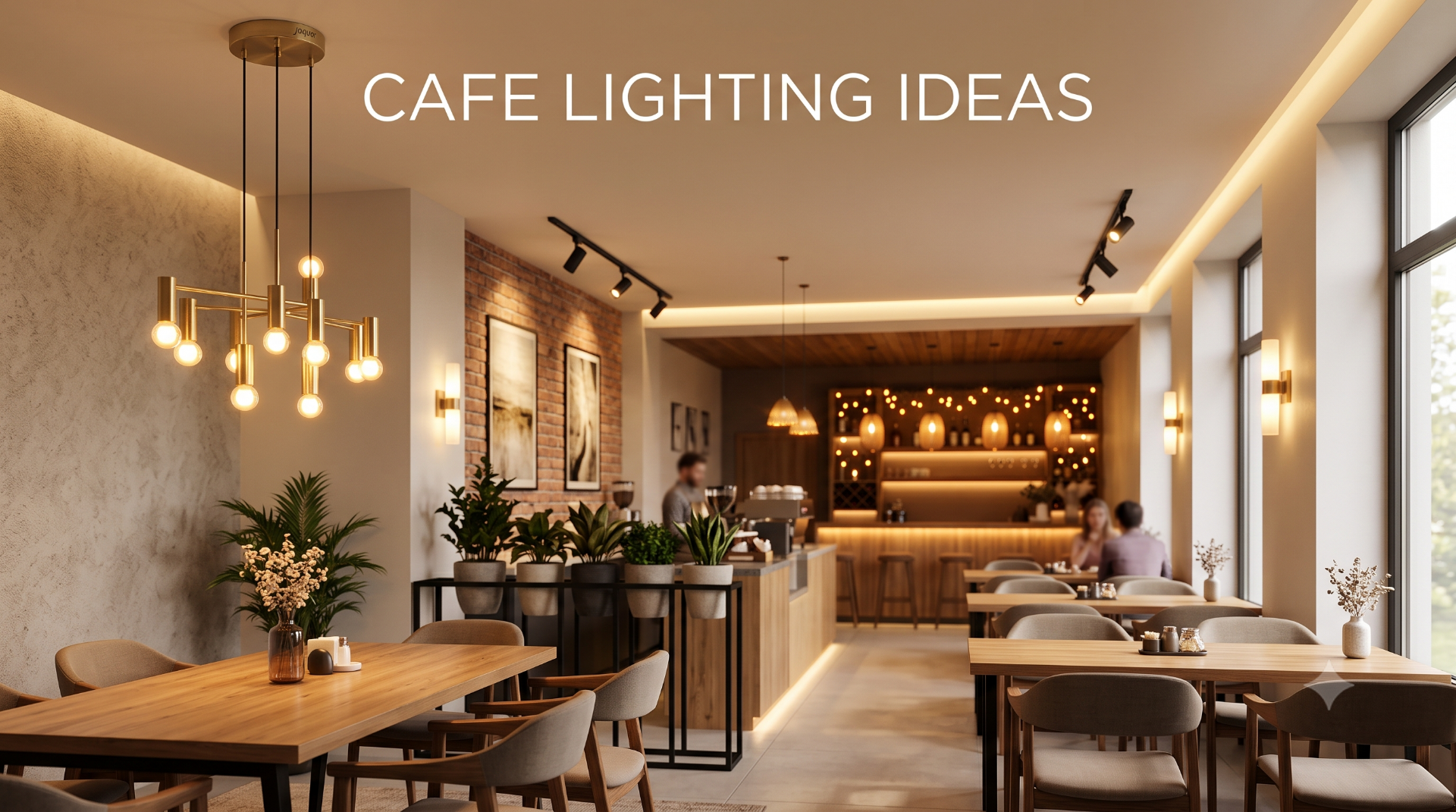
A café can have beautiful furniture, carefully selected finishes and a strong menu, yet still feel ordinary if the lighting has not been considered properly. Light influences the atmosphere of the room, the way colours appear, the comfort of customers and even how different seating areas are perceived.
For café interiors in Sri Lanka, lighting also needs to work with a wide variety of architectural conditions. Some cafés make extensive use of daylight and open façades, while others operate within compact urban interiors where artificial lighting does most of the visual work. The right lighting approach needs to respond to both.
The goal is not to make every corner equally bright. Instead, a well-designed lighting plan creates layers, allowing each part of the café to perform its intended function while contributing to a coherent interior.
From pendants above tables to wall lamps, indoor lighting and decorative fixtures, the choice and placement of each element can change the character of the space significantly.
Why Café Lighting Needs More Than Basic Illumination
A café is not a single-use environment.
A customer may enter for a takeaway coffee and leave within minutes, while another person may sit for two hours working or meeting a friend. A family may prefer a well-lit table, while a couple may appreciate a more intimate seating corner.
This variety means the lighting needs to provide both functional visibility and atmosphere.
A basic lighting plan should consider four broad layers:
- General illumination
- Task or focused illumination
- Accent illumination
- Decorative illumination
These layers do not need to be visually obvious. When balanced correctly, they simply make the space feel natural and comfortable.
Jaquar's Sri Lankan lighting portfolio covers decorative, indoor, outdoor and lamp/accessory categories, while its decorative collection includes chandeliers, pendants, floor lamps, table lamps and wall lamps.
1. Establish a Comfortable Ambient Layer
Ambient lighting forms the foundation of the café.
It should provide enough illumination for customers and staff to move around comfortably without making the interior feel overly bright.
Indoor lighting can be used across the main seating area, entrance and circulation zones. The exact fixture arrangement should follow the architecture rather than simply filling the ceiling with equally spaced lights.
For example, a narrow café may need a linear visual rhythm, while a larger open room may benefit from distinct lighting zones.
The most important principle is consistency of comfort rather than uniformity of brightness.
2. Make the Café Table the Visual Centre
Tables are where customers spend most of their time, so they deserve thoughtful lighting.
Pendant lights are particularly useful because they can visually anchor a table while providing focused illumination.
Jaquar's decorative range includes pendant lighting in a variety of forms, including clear-glass and other decorative pendant styles.
For a long communal table, several pendants can create a repeated rhythm. For smaller tables, individual fixtures can establish a more intimate visual zone.
However, the hanging height should always be considered carefully. A pendant that is too low can obstruct conversations and sightlines. One that is too high may lose its relationship with the table.
3. Use Different Lighting for Different Seating Areas
Many cafés now include multiple seating formats.
There may be:
- Small two-person tables
- Larger shared tables
- Window seating
- Lounge-style areas
- Individual workstations
- Outdoor-connected seating
Lighting can help distinguish these areas without building walls or installing physical partitions.
A communal table may have a stronger overhead lighting rhythm, while a quieter corner can use a softer combination of decorative fixtures.
This technique makes the café feel more varied while keeping the overall interior visually connected.
4. Give the Counter Functional Importance
The counter is both a service point and an important part of the café's visual identity.
It needs sufficient illumination for ordering, payment, menu visibility and staff activity.
If the counter has a distinctive material or backdrop, lighting can also be used to emphasise it.
However, making the counter dramatically brighter than every other area can create an uncomfortable visual imbalance. The lighting should establish importance without overwhelming the seating environment.
A combination of indoor lighting and carefully selected decorative fixtures can achieve this balance.
5. Introduce Wall Lamps for Depth
Large blank walls can make a café feel visually flat.
Wall lamps provide an opportunity to introduce illumination at a different height and break up expansive vertical surfaces.
Jaquar's decorative lighting category includes wall lamps alongside other decorative fixture types, providing options for introducing another layer of illumination into an interior.
Wall fixtures can be used:
- Along seating walls
- Near entrances
- Around architectural niches
- Beside selected decorative elements
- Along quieter circulation areas
They are particularly effective when used selectively rather than repeated across every wall.
6. Let Decorative Lighting Support the Design Concept
Decorative lighting should feel like part of the café's interior rather than an unrelated addition.
A contemporary café may benefit from simple, restrained fixtures. A more expressive space may use pendants, chandeliers or distinctive wall lamps as visual features.
The choice should relate to the existing materials.
If the interior already includes strong textures, patterns and colours, simple lighting may create better balance. If the architecture is intentionally understated, decorative lighting can provide visual interest.
This is where lighting becomes part of interior storytelling.
7. Use Natural Light as an Asset
Sri Lankan cafés can benefit significantly from natural daylight, particularly in spaces with large windows, open façades or connections to outdoor areas.
Instead of competing with daylight, artificial lighting should complement it.
During the day, natural light may provide much of the general illumination. Artificial fixtures can then become more important in deeper parts of the interior.
As daylight reduces, the artificial lighting should gradually take over without making the café feel like a completely different environment.
This is particularly important in cafés that operate from morning into evening.
8. Create a Transition From Day to Evening
The café should remain visually coherent as natural light changes.
A common mistake is designing an interior that looks excellent under daylight but loses its atmosphere after sunset.
The lighting plan should therefore be evaluated at different times.
Observe:
- Window seating during bright daylight
- Central tables during afternoon
- Counter visibility after sunset
- Wall surfaces in evening conditions
- Reflections from glass and polished finishes
This allows designers to identify areas that become too dark or overly bright as the day progresses.
9. Use Warmth Carefully
Lighting colour influences how customers perceive the atmosphere.
A warmer visual appearance can create a relaxed and intimate feeling, while a more neutral appearance can support a cleaner, brighter environment.
The decision should be based on the overall design rather than following a universal rule.
Wood, stone, painted walls, metal and glass can all react differently to light. The final effect should therefore be assessed in the actual interior or through realistic samples before a large-scale installation.
Consistency also matters. Mixing visibly different light colours without a design reason can make the café appear disjointed.
10. Make Compact Cafés Feel More Open
Smaller cafés can benefit from carefully positioned lighting.
Too many large fixtures can make a compact room feel visually crowded. A better approach may be to use understated indoor lighting for the basic illumination and reserve decorative fixtures for selected focal points.
Wall lighting can help distribute visual interest vertically, while pendants can define individual tables without requiring additional partitions.
The result is a space that feels organised without being over-designed.
11. Use Lighting to Highlight Materials
Lighting can change the perceived texture of a surface.
A textured wall, timber finish, stone surface or decorative panel can become a feature when illuminated appropriately.
However, accent lighting should be used selectively. If every surface receives equal emphasis, the eye has nowhere specific to settle.
Choose a small number of architectural or interior features that deserve attention.
This creates visual hierarchy and makes the lighting scheme more intentional.
12. Think About Customer Sightlines
A café is experienced mostly from seated eye level.
This means designers should evaluate lighting from the perspective of someone sitting at a table, not just from a standing position.
Check whether:
- A pendant blocks the view across the table
- A bright fixture sits directly in the customer's line of sight
- Reflections appear on tabletops
- Wall lights create distracting glare
- Different lighting zones compete visually
These details can have a surprisingly large impact on comfort.
13. Use Table and Floor Lamps Selectively
Table and floor lamps can introduce smaller pools of light into lounge or quieter seating areas.
Jaquar's decorative collection includes both floor lamps and table lamps.
These fixtures can help create a more residential or relaxed feeling within cafés that use lounge-style furniture.
They should, however, be positioned where they do not obstruct movement, occupy valuable tabletop space or create maintenance difficulties.
14. Match Lighting Scale With the Architecture
Fixture size should correspond with the room.
Large decorative fixtures can become effective focal points in cafés with generous ceiling heights. Smaller spaces generally require more restrained proportions.
The relationship between fixture and furniture is equally important.
A pendant positioned above a small table should not visually overpower it. Similarly, a tiny fixture over a long communal table may lose its impact.
Scale is one of the simplest ways to make a lighting scheme feel professionally designed.
15. Avoid Over-Lighting
More light does not necessarily mean a better café.
When every surface is brightly illuminated, shadows disappear and the interior can lose depth.
A layered approach is usually more effective:
General light → table light → selected accent light → decorative light
Each layer has a different purpose.
Some areas can remain comparatively subdued while others receive more attention. This contrast creates visual depth without compromising basic visibility.
16. Create a Recognisable Lighting Language
A successful café often has a consistent visual vocabulary.
The same finish, shape or fixture family can be repeated in selected locations to create cohesion.
For example, a particular pendant style may appear over tables while related wall fixtures repeat the same visual character elsewhere.
The repetition should be intentional rather than excessive.
Using too many unrelated fixture styles can make a relatively small interior feel visually fragmented.
17. Consider Maintenance From the Beginning
Cafés are working environments. Lighting fixtures are exposed to dust, cleaning routines, food preparation and frequent customer activity.
Fixtures should therefore be selected not only for appearance but also for practicality.
Consider whether they are easy to access for routine maintenance and whether their location interferes with cleaning or daily operations.
A beautiful lighting fixture that is difficult to maintain can become a long-term operational problem.
A Simple Café Lighting Framework
For designers planning a new café, the following framework can provide a useful starting point:
Step 1: Map the space
Identify entrances, counters, tables, circulation paths and service areas.
Step 2: Identify natural light
Understand where daylight enters and how it changes throughout the day.
Step 3: Establish ambient illumination
Use indoor lighting to provide the basic level of comfortable visibility.
Step 4: Define customer zones
Use focused and decorative lighting to distinguish different seating experiences.
Step 5: Add visual accents
Introduce wall lamps, pendants or other decorative fixtures selectively.
Step 6: Review the space from seated eye level
Check glare, reflections, fixture height and sightlines.
Step 7: Test day and evening conditions
Make sure the design works across the café's operating hours.
Conclusion
Effective café lighting is a balance between practical illumination and atmosphere. It should help customers navigate the space comfortably, make tables inviting, support staff activity and give the interior a recognisable visual character.
The strongest results rarely come from using the maximum number of fixtures. They come from understanding where light is needed, where it can be softer and where a decorative fixture can add meaning to the space.
Jaquar's Sri Lankan lighting range spans decorative and indoor solutions, with pendants, wall lamps, chandeliers, floor lamps and table lamps providing different ways to build layers of illumination. Such a broad lighting ecosystem allows designers to approach each café according to its architecture, furniture and intended customer experience rather than forcing every space into the same lighting formula.
FAQs
- What are the most important lighting areas in a café?
The main seating area, tables, counter, entrances and circulation paths generally require the most attention. Decorative areas can then be layered around these functional zones. - Are pendant lights suitable for small cafés?
Yes. Compact pendants can visually define tables without taking up floor space. Their size and hanging height should be proportionate to the room and furniture. - How can wall lamps improve café interiors?
Wall lamps introduce illumination at a different height, add depth to blank walls and can help establish a more layered atmosphere. - How should café lighting work with natural daylight?
Artificial lighting should complement daylight rather than compete with it. Areas deeper inside the café may require stronger artificial illumination as natural light decreases. - How can a café avoid looking over-lit?
Use different lighting layers instead of making every area equally bright. General illumination can provide comfort while decorative and focused lighting establish visual hierarchy.