


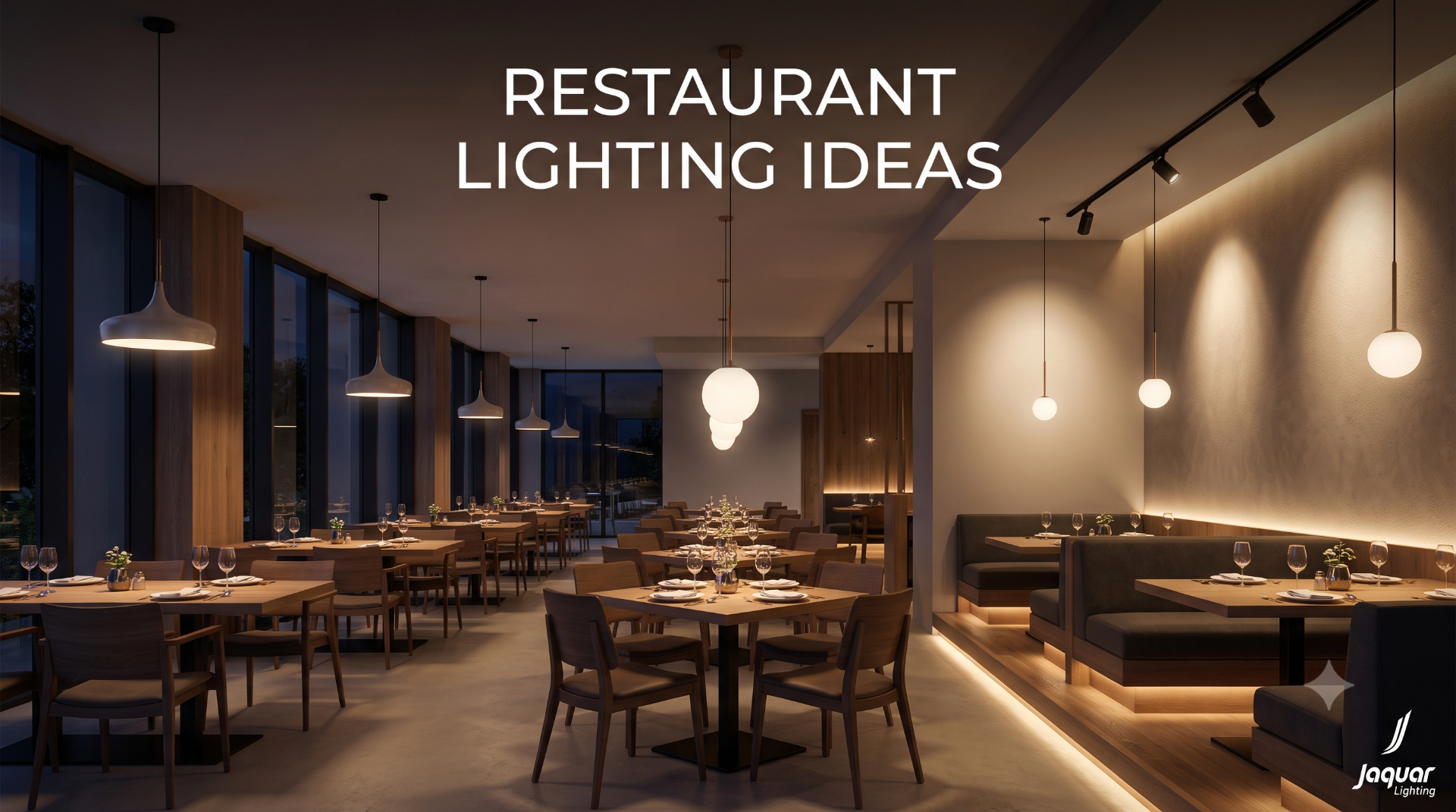
A memorable restaurant has a rhythm of its own. Guests move from the entrance to the table, conversation settles in, food arrives, and the atmosphere gradually becomes part of the experience. Lighting quietly supports each of these moments.
It influences whether a dining room feels open or intimate, whether architectural details stand out or disappear, and whether a space remains comfortable as daylight fades into evening. For restaurants in Sri Lanka, where dining environments can range from compact urban cafés to larger restaurants with verandas, courtyards and outdoor seating, lighting needs to respond to both the interior and the surrounding environment.
The most effective approach is rarely a single fixture or a uniform brightness level. Good lighting combines different sources and positions them according to how people actually use the restaurant.
Start with the Experience, Not the Fixture
Before selecting lights, define the experience the restaurant is trying to create.
A breakfast café may benefit from a brighter and fresher environment. An evening restaurant may need a softer atmosphere. A casual family restaurant may need balanced visibility across a larger seating area, while a smaller dining space may benefit from more concentrated lighting around individual tables.
This distinction matters because the same fixture can create very different results depending on its placement.
The lighting should follow the restaurant's identity rather than being selected independently from the interior design.
1. Establish Comfortable General Illumination
Every restaurant needs a foundation of general illumination.
Recessed, surface or general indoor fixtures can provide consistent light across the main dining space while keeping attention on the furniture, food and people rather than the lighting equipment itself.
Uniformity does not mean every area needs identical brightness. The goal is to prevent uncomfortable dark patches and overly bright sections while maintaining visual hierarchy.
For restaurants with open floor plans, lighting can follow the layout of tables and circulation routes. For spaces divided into smaller sections, separate lighting zones can help each area feel more intentional.
Jaquar Sri Lanka's indoor lighting range includes commercial indoor solutions, providing options that can form the functional foundation of a restaurant lighting scheme.
2. Make Dining Tables the Visual Centre
The dining table is where most of the restaurant experience happens.
Pendant lights are particularly useful because they naturally bring the visual focus downward toward the table. They can define individual tables or groups of tables while contributing to the decorative character of the interior.
A row of pendants can work well over a long dining table. Several smaller fixtures can establish rhythm over a larger seating arrangement.
Spacing matters.
If fixtures are positioned too closely, the ceiling may appear crowded. If they are too widely separated, some tables may lose the intended visual emphasis.
The fixture should also relate to the size of the furniture. A small table usually needs a more restrained fixture, while a large communal table can accommodate a stronger visual element.
Jaquar's Sri Lankan portfolio includes a variety of pendant lighting designs, giving designers options for different dining interiors.
3. Use Wall Lighting to Add Depth
Ceiling lights alone can leave restaurant interiors feeling flat.
Wall lamps introduce illumination from a different height and can help make vertical surfaces part of the lighting composition. They are particularly useful along long walls, beside seating areas or near architectural features.
A wall light can also become a decorative detail in its own right.
For restaurants with textured surfaces, wood detailing, artwork or distinctive wall finishes, carefully positioned wall illumination can bring these elements into the evening environment.
The effect should remain controlled. The objective is to reveal the character of the wall rather than create a brightly illuminated backdrop everywhere.
Jaquar Sri Lanka offers decorative wall lamp options that can contribute both functional and visual layers to hospitality interiors.
4. Use Decorative Lighting with Restraint
Decorative fixtures have a special role in restaurants because they can become part of the brand's visual identity.
A pendant above a reception desk, a chandelier in a central dining area or a wall lamp repeated along a feature wall can help establish a recognisable design language.
However, decorative lighting works best when it has a clear relationship with the rest of the interior.
If the restaurant already contains patterned flooring, expressive furniture, artwork and strong wall treatments, a highly elaborate lighting fixture may create unnecessary visual competition.
On the other hand, a simple interior may benefit from a more distinctive decorative element.
The question is not whether the fixture looks impressive by itself. It is whether it belongs in the room.
5. Create a Comfortable Evening Atmosphere
Restaurants often become more atmospheric as daylight disappears.
Rather than increasing illumination everywhere, consider allowing selected areas to carry more visual emphasis.
Dining tables can remain clearly defined while peripheral areas become quieter. Wall lighting can bring depth to the room. Decorative fixtures can provide visual interest without becoming the primary source of illumination.
This layered approach makes the restaurant feel more dimensional.
It also allows guests to focus naturally on their immediate surroundings instead of being surrounded by an equally bright environment.
6. Use Lighting to Guide Movement
Lighting can help people understand how a restaurant works.
The entrance should be visually clear. The route toward the dining area should be easy to follow. Steps, changes in level and important circulation paths should receive appropriate attention.
Within the dining room, changes in lighting can subtly distinguish one area from another.
For example, a brighter entrance can transition into a calmer dining environment. A private dining section can have a slightly different lighting character from the main floor.
This creates a sense of movement without requiring physical barriers.
7. Plan Lighting Around the Restaurant's Ceiling
Ceiling height has a significant influence on fixture selection.
Lower ceilings generally benefit from compact or integrated lighting that maintains a sense of openness. Recessed fixtures can be useful where the ceiling structure allows them.
Higher ceilings provide greater flexibility for pendants and chandeliers. These fixtures can help occupy vertical space and create a stronger relationship between the ceiling and dining furniture.
Long spaces can also benefit from linear lighting, especially where the architecture already has strong horizontal lines.
The lighting should work with the ceiling rather than simply being attached to it.
8. Make Compact Cafés Feel More Interesting
Smaller cafés do not require a large number of fixtures to create atmosphere.
A simple combination of general indoor lighting and carefully selected decorative pendants can establish a strong visual identity.
Wall lamps can be useful where floor space is limited. They add another layer without occupying tables or circulation areas.
In a small space, repetition is particularly effective. Using the same pendant at consistent intervals can create visual rhythm and make the interior feel more organised.
The fewer elements there are, the more important each one becomes.
9. Use Lighting to Define Larger Dining Areas
Larger restaurants have the opposite challenge: preventing the space from feeling empty or visually disconnected.
Lighting can divide a large floor plan into comfortable zones.
A series of pendant fixtures can define seating clusters. Recessed or surface lighting can provide the general foundation. Track or focused indoor lighting can bring attention to selected architectural features.
Decorative fixtures can then be reserved for areas that need stronger identity, such as an entrance, central dining zone or private section.
This creates hierarchy without physically dividing the room.
10. Consider Natural Light During the Day
Sri Lankan restaurants can experience strong natural daylight, particularly where large windows, open façades, verandas or outdoor dining areas are part of the architecture.
Artificial lighting should therefore be considered alongside daylight.
A restaurant that feels perfectly balanced at night may look unnecessarily bright during the day if artificial fixtures are positioned or controlled without considering natural illumination.
The interior should transition comfortably from daylight to artificial light.
Where appropriate controls are available, different lighting zones can be adjusted according to the time of day.
11. Bring Outdoor Dining into the Overall Design
Outdoor seating can become a significant part of a restaurant's identity.
Rather than treating the exterior as an afterthought, carry the same design language into the outdoor area.
Outdoor lighting can define seating boundaries, entrances, walls and circulation paths. The goal is to make the exterior comfortable without washing the entire area in uniform brightness.
Selected wall or outdoor fixtures can establish a gentle visual boundary around the dining area.
For restaurants with landscaped surroundings, lighting should also respect the balance between the seating area and its environment. Too much illumination can eliminate the sense of depth beyond the immediate table.
Jaquar Sri Lanka's outdoor lighting portfolio includes solutions for exterior applications, giving hospitality spaces options for extending the lighting scheme beyond the main building.
12. Select Lighting According to the Restaurant's Materials
Lighting interacts closely with interior materials.
Wood can create a different visual effect under warm illumination than under cooler light. Stone, metal, glass and textured surfaces also respond differently depending on the direction and character of the light.
This is why fixture selection should happen alongside material selection rather than after it.
A wall with texture may benefit from light arriving from an angle. A smooth wall may require a different treatment. A decorative surface may need selective illumination rather than uniform brightness.
Understanding these relationships is what turns lighting from a collection of fixtures into a complete design.
13. Use Colour Temperature Thoughtfully
Colour temperature contributes strongly to the atmosphere of a restaurant.
Warmer light tends to create a more relaxed visual environment, making it suitable for many evening dining settings. Neutral illumination can offer a cleaner and more energetic character and may be useful in cafés or areas where clarity is particularly important.
The correct choice depends on the restaurant's concept.
More importantly, lighting in visually connected areas should remain coherent. Abrupt changes in colour temperature can make the interior appear fragmented.
The colour of the walls, furniture and finishes should also be considered before making the final selection.
14. Think About Guests' Visual Comfort
Guests may spend an hour or more at a restaurant table. Lighting that feels acceptable for a short period can become uncomfortable over a longer meal.
Glare should therefore be considered carefully.
Fixtures should not be positioned directly in a guest's line of sight where avoidable. Excessively bright sources should not dominate the dining table.
The best lighting often feels effortless. Guests notice the restaurant rather than constantly noticing the light source.
15. Avoid These Common Lighting Mistakes
Using one lighting type everywhere: A restaurant needs different levels of visual emphasis.
Making the entire room equally bright: Uniform brightness can remove atmosphere and depth.
Ignoring walls: Vertical surfaces are an important part of the visual environment.
Choosing decorative fixtures without considering scale: A fixture should relate to the ceiling height, furniture and room dimensions.
Overcrowding a small ceiling: Too many fixtures can make compact interiors feel busy.
Forgetting outdoor areas: Exterior seating should feel connected to the restaurant's overall character.
Selecting lighting only by appearance: A fixture may look attractive but still be unsuitable for the room's function or scale.
16. A Simple Selection Process for Restaurant Owners
Start by mapping the restaurant.
Mark the entrance, main dining area, service points, circulation routes, private sections and outdoor seating.
Next, determine the lighting role of each zone.
Some areas need general illumination. Others need focused light. Certain areas may primarily require decorative treatment.
Then decide where visual emphasis should fall.
Dining tables, feature walls and important architectural elements can receive additional attention.
Finally, select fixture types according to the space.
Recessed and surface fixtures can establish the base. Pendants and chandeliers can create visual identity. Wall lamps can add depth. Outdoor lighting can extend the experience beyond the main interior.
This process is more reliable than choosing fixtures first and trying to make the layout fit around them.
Conclusion
Good restaurant lighting should support the complete dining experience, from the moment guests enter to the moment they leave. It needs to provide comfortable visibility while giving the interior atmosphere, depth and a sense of identity.
For Sri Lankan restaurants, the relationship between indoor spaces, natural daylight and outdoor dining makes this particularly important. A considered combination of indoor, decorative and outdoor lighting can create continuity across different parts of the property.
Jaquar's lighting portfolio provides options across indoor, decorative and outdoor applications, allowing different fixture types to work together within a wider hospitality design. The emphasis remains on selecting the right light for the right space rather than using more fixtures than the restaurant actually needs.
FAQs
- What lighting should a restaurant use for dining tables?
Pendant lighting is particularly useful above dining tables because it creates visual focus while adding a decorative element. It can be combined with general indoor illumination. - Can wall lights be used in restaurants?
Yes. Wall lamps can add a secondary layer of illumination, highlight walls and architectural details, and create greater visual depth. - How do I choose lighting for a small restaurant?
Use a simple foundation of general lighting and add a limited number of decorative or wall fixtures. Keeping the design consistent prevents the space from feeling crowded. - How should restaurant outdoor areas be lit?
Focus on comfortable visibility around tables, entrances and circulation paths while maintaining a connection with the interior lighting style. - Should restaurant lighting be warm or cool?
The choice depends on the restaurant's concept and materials. Warmer illumination can create a relaxed dining environment, while neutral illumination can provide a cleaner, more energetic feel.